
From Foam to Felt with Fraggle Rock's Kanja Chen and Hat Restorer La Touche
Listen to the Episode
If you’d like to hear the full conversation, you can listen on your preferred platform:
🎧 Apple Podcasts → Click Here
🎧 Spotify → Click Here
📺 YouTube → Click Here
Creativity doesn’t always show up early.
Sometimes it looks like a kid giving voices to toys in a basement.
Sometimes it looks like a hat that carries the memory of someone you loved.
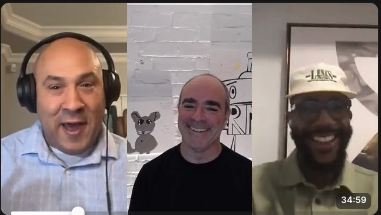
For Episode 2 of This Podcast Needs A Name, I sat down with two people whose careers couldn’t look more different — yet felt increasingly aligned the longer we talked.
Kanja Chen, Writer, Producer, and Puppeteer on Fraggle Rock: Back to the Rock, whose work is rooted in play, repetition, and breathing life into inanimate objects.
La Touche, a Cultural Brand Strategist and Renowned British Hat Restorer, whose work transforms overlooked objects into carriers of memory, identity, and story.
What I expected was a conversation about puppets and hats.
What we actually talked about was commitment.
“Creativity isn’t something you ‘find.’ It’s something that slowly shapes who you become - if you stay committed long enough.”
Creativity Doesn’t Always Reveal Itself Early
Kanja described creativity as something that was always there — play that never stopped. Giving voices to toys. Bringing objects to life. Long before it became a profession.
La Touche’s story unfolded differently. Creativity didn’t fully click until later — when he watched a sketch become a physical garment and realized ideas could move from imagination to object.
That contrast mattered.
Because it quietly dismantled the myth that creativity shows up the same way — or on the same timeline — for everyone.
Sometimes it’s obvious. Sometimes it’s inherited. Sometimes it sneaks up on you.
Making Something Isn’t the Same as Bringing It to Life
Neither guest talked about their work as simply “making things.”
They talked about transformation.
Puppetry, for Kanja, is about attention, repetition, and care — the slow process of giving an object personality and presence.
For La Touche, hats aren’t accessories. They’re emotional artifacts. Objects that shift how people see themselves the moment they put them on.
At some point, both landed on the same idea:
An object becomes meaningful when it carries story.
And story requires intention.
“Confidence can be loud. Competence is quieter-and it takes time. Creativity seems to demand the second.”
Confidence vs. Competence
One of the strongest through-lines in the episode was the difference between confidence and competence.
Not confidence as bravado — but confidence rooted in doing the work.
Both guests grew up in cultures where craftsmanship mattered. Where knowing how to do something wasn’t optional. Where commitment to process wasn’t romanticized — it was expected.
In a world that often rewards personality over depth, this stood out.
You can feel confident quickly.
Competence takes time.
And lasting creativity seems to demand the second.
Creativity Isn’t Lost — It’s Often Unlearned
When the conversation turned to whether everyone can be creative, both guests said yes — without turning it into a slogan.
Creativity, they argued, is something we’re born with and slowly taught to suppress. Curiosity gets corrected. Play gets rushed. Efficiency replaces exploration.
Creativity doesn’t disappear.
It gets redirected. Or ignored.
The Thread That Held It All Together
More than anything else, this episode kept circling back to commitment.
Not overnight success. Not “finding your passion.” Not waiting to feel ready.
Just commitment.
To practice. To curiosity. To going deeper instead of wider. To doing the thing — even when it’s invisible.
Or as one line from the conversation summed it up:
Most people aren’t more talented. They’re just more experienced.
This wasn’t a conversation about being artistic.
It was a conversation about letting creativity shape identity — slowly, imperfectly, and over time.
Which feels worth paying attention to.
Listen to the Episode
If you’d like to hear the full conversation, you can listen on your preferred platform:
🎧 Apple Podcasts → Click Here
🎧 Spotify → Click Here
📺 YouTube → Click Here
New episodes of This Podcast Needs a Name explore how creativity, curiosity, and play actually show up in real life — across different disciplines and perspectives.
# # #