
Draft Ugly, Edit Beautifully with Disney's Matt Conover & Music Composer/Producer Philip Sheppard
Listen to Episode 1: Draft Ugly, Edit Beautifully
🎧 Apple Podcasts → Click Here
🎧 Spotify → Click Here
📺 YouTube → Click Here
Creativity isn’t clean.
If it were confident, orderly, and predictable, most of us wouldn’t recognize it — and we probably wouldn’t want to do it.
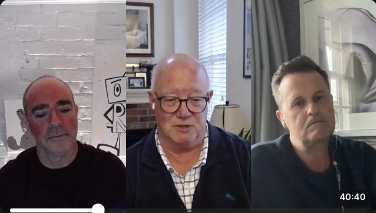
For Episode 1 of This Podcast Needs A Name, I sat down with two people who have every reason to feel like they’ve “figured it out”:
Matt Conover, a Disney Live Entertainment producer who’s helped shape everything from intimate performances to massive global spectacles.
Philip Sheppard, an award-winning composer, producer, and virtuoso cellist whose work spans films, games, Olympic ceremonies, and legendary studios like Abbey Road.
And within minutes, we weren’t talking about success.
We were talking about doubt.
Which felt reassuring. And also mildly inconvenient for my inner perfectionist.
Imposter Syndrome Is the Cost of Admission
The conversation landed where most honest creative conversations eventually go — that voice asking:
Do I belong here?
Matt put it plainly: imposter syndrome often shows up when you’re surrounded by people you respect.
“If you’re the smartest person in the room, you’re probably in the wrong room.”
Philip shared stories that permanently retire the idea that success cures self-doubt — including conducting world-class orchestras while quietly wondering if everyone could tell he had no idea what he was doing.
The takeaway wasn’t that confidence fixes everything.
It was this:
Imposter syndrome is often the price of doing meaningful work.
If you never feel it, you may not be stretching.
“Unlimited freedom sounds appealing, but it’s usually paralyzing.”
Constraints Don’t Limit Creativity — They Focus It
Unlimited freedom sounds appealing. In practice, it’s paralyzing.
Both guests kept returning to the same idea from completely different disciplines: constraints don’t kill creativity — they focus it.
Matt described lighting design exercises where students are given three lights instead of four hundred.
“Anybody can do something with 400 lights. What can you do with three?”
Philip echoed this across music, film, and live performance — intentionally limiting tools, time, or instruments not as punishment, but as permission to go deeper.
The box isn’t the problem. The absence of intention is.
Draft Ugly. Edit Beautifully.
This phrase surfaced again and again — for good reason.
Philip said it best:
“The first draft is supposed to be bad.”
Waiting for polish at the beginning is just fear wearing better standards.
The job of a first draft isn’t to impress.
It’s to exist.
Only once something is on the page, in the room, or out in the world can judgment and experience actually help.
Ugly drafts aren’t a failure. They’re the feature.
“Great creative work isn’t about adding more ideas, more features, or more noise. It’s about knowing what to remove — and having the confidence to trust what remains.”
Subtraction Is the Skill Nobody Brags About
Another quiet through-line: subtraction.
Not adding more. Not making it bigger. Not throwing everything at the wall.
Removing what doesn’t serve the core emotion, story, or experience.
“You take away everything that isn’t the statue.”
Clarity lives on the other side of restraint — and restraint takes confidence.
“Creativity isn’t always about having the big idea. Sometimes it’s about paying attention — and realizing you have an opportunity to make something meaningful right there.”
The Goal Isn’t the Moment. It’s the Feeling That Stays.
People may not remember what you said or built.
But they remember how you made them feel.
From Disney parks to concerts to one-on-one moments on stage, the lesson was the same: no experience is too small to be excellent.
Big spectacle matters.
So do the quiet, human moments no one planned and everyone remembers.
Listen to Episode 1: Draft Ugly, Edit Beautifully
🎧 Apple Podcasts → Click Here
🎧 Spotify → Click Here
📺 YouTube → Click Here
New episodes of This Podcast Needs a Name explore how creativity, curiosity, and play actually show up in real life — across different disciplines and perspectives.
# # #