
From Stars to Star Wars - With Astrophysicist Dr. Michelle Thaller and Toy Photographer Mitchell Wu
Listen to the Episode
If you’d like to hear the full conversation, you can listen on your preferred platform:
🎧 Apple Podcasts → Click Here
🎧 Spotify → Click Here
📺 YouTube → Click Here
There’s a moment in some conversations where you realize scale doesn’t matter.
That happened about five minutes into this one.
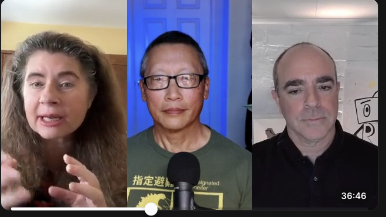
For Episode 4 of This Podcast Needs A Name, I sat down with Michelle Thaller and Mitchel Wu — two people whose work couldn’t look more different from the outside.
Michelle spent nearly three decades at NASA, helping people understand the universe — not just intellectually, but emotionally.
Mitch builds cinematic, story-driven images using toys — turning familiar characters into moments that feel alive.
Different scales. Same goal.
Making the impossible feel human.
Imagination Needs Protection
One of the most striking parts of the conversation was how intentionally imagination is protected in high-stakes environments.
At NASA, creativity isn’t left to chance. Teams are designed with different thinkers, different strengths, and even different physical environments — spaces that encourage exploration before solutions are locked in.
Imagination isn’t assumed.
It’s designed for.
Mitch echoed this from a very different angle. His strongest work doesn’t start with technical perfection — it starts with story. With curiosity. With letting play lead before judgment shows up.
In both cases, the pattern was clear:
Imagination survives where it feels safe.
Play Is Not the Opposite of Serious Work
Both guests shared how imagination wasn’t just fun growing up — it was a way to cope.
Solitary play. World-building. Daydreaming. Escaping into stories when real life felt rigid, lonely, or overwhelming.
As adults, we tend to dismiss that instinct as childish.
But what if play was never the problem?
What if it was training?
A rehearsal space for problem-solving, empathy, and resilience.
“Creativity isn’t about having the right personality. There is no right way to be a scientist-or an artist.”
The Myth of the “Right Kind” of Thinker
Another thread that kept surfacing was how damaging labels can be.
Left-brain. Right-brain. Creative. Analytical. Technical. Artistic.
Michelle was told she didn’t have the “right personality” to be a scientist.
Mitch didn’t even know his field existed until later in life.
Neither followed a clean path.
Both brought everything with them.
And both pushed back on the idea that there’s one correct way to think, work, or contribute.
The most complex problems don’t get solved by one kind of mind.
They get solved by many.
“Fear is usually the signal that you’re standing in front of real growth.”
Doubt Isn’t a Bug — It’s a Signal
Imposter syndrome came up, as it always does in honest conversations.
And neither guest tried to eliminate it.
They normalized it.
Doubt doesn’t mean you don’t belong.
It often means you care.
The danger isn’t feeling it.
It’s adding shame on top of it.
Where This Lands
This episode wasn’t about space. And it wasn’t about toys.
It was about translation.
About taking something big — an idea, a challenge, a career — and making it feel close enough to engage with.
That’s where imagination does its best work.
“Nothing you learn is wasted. Every experience transfers forward.”
So I’ll leave you with this:
What’s one thing in your world that feels too big — and how might you make it more human first?
Listen to the Episode
If you’d like to hear the full conversation, you can listen on your preferred platform:
🎧 Apple Podcasts → Click Here
🎧 Spotify → Click Here
📺 YouTube → Click Here
New episodes of This Podcast Needs a Name explore how creativity, curiosity, and play actually show up in real life — across different disciplines and perspectives.
# # #